Color Hardener
When concrete is colored with color hardener pigment is broadcast or thrown onto a freshly finished concrete surface. When the truck arrives at the job and begins to pour, the concrete that comes out the chute is gray. Once it is placed and finished the contractor throws handfuls of colored pigment onto the surface and floats it in. Color hardener consists of pigmented Portland cement and sand aggregate. By adding color hardener on top of the concrete, a denser harder surface is created.
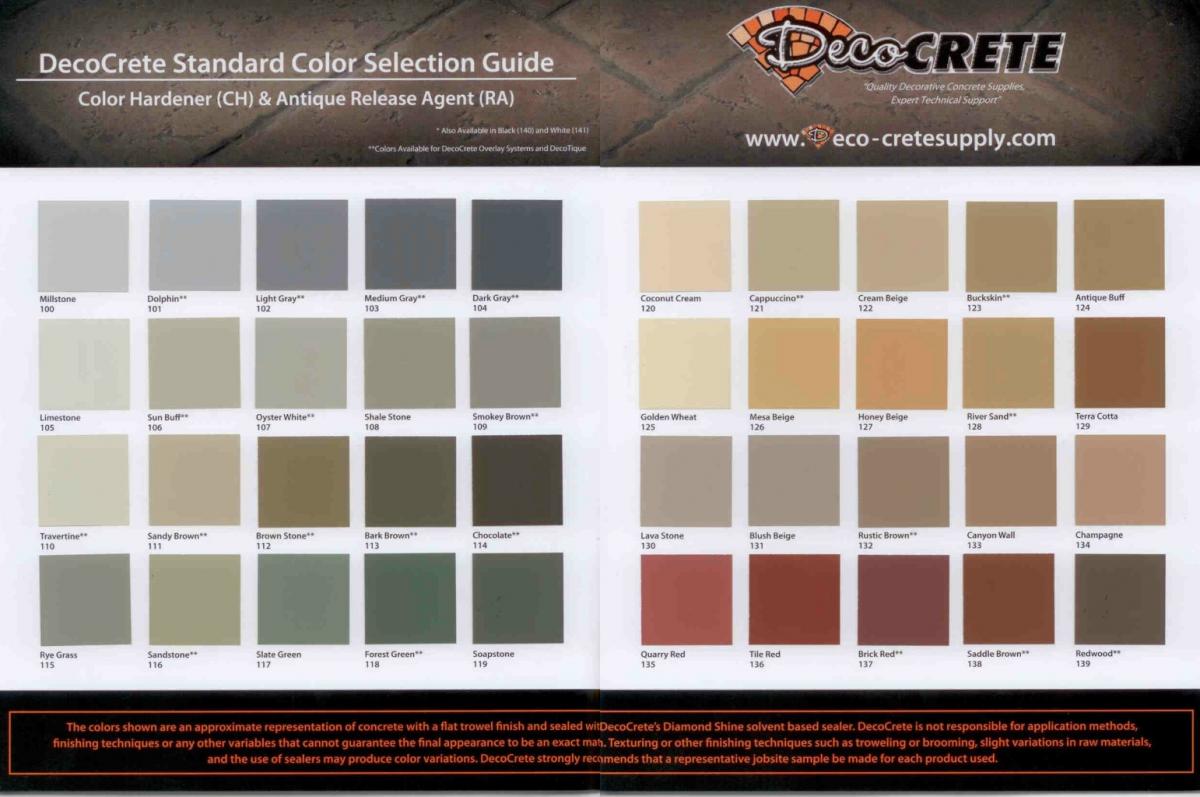
One advantage of coloring with color hardener is certainty of color. Because the pigments are pre-mixed, a truer color can be achieved. Deco-Crete Supply's color hardeners use only the finest pigments available and ensure a uniform, UV stable colored surface (see Color Hardener Chart).
The main advantage of color hardener is the dense surface it creates. Cedar Point and Disneyland both spec color hardener on their jobs because it is can withstand a large volume of foot traffic without fading. However, because only the top 1/4” of the concrete surface is colored, if it were to chip or crack gray concrete would be seen.
Once the concrete has been colored, a powdered or liquid release is added to the surface. Release acts as a bond breaker between the rubber stamps and the concrete surface. Powdered release comes in a variety of colors (see Deco-Crete Supply's Release Chart) and is washed off with a pressure washer after the concrete has cured for several days. The addition of a secondary color through the release powder gives the concrete more depth and texture as the release finds its ways to the lower impressions of the textured surface.
If contractors do not want to deal with the mess of powdered release, liquid release is a viable alternative. Liquid release, sometimes called bubble gum release, is applied through a sprayer and serves the same bond breaking purpose as powdered release. After the surface has been stamped and cured for several days the contractor comes back and adds the secondary “antiquing” color in a number ways. One antiquing product that can be used is Texture Enhancer.
Some contractors are beginning to experiment with mixing powdered release and liquid release. This gives them the ability to color, stamp, and antique without coming back to either wash the release off or add the antiquing agent.
After the antiquing process has been completed all that is left to do is seal the concrete.
DIY Rating - 10* Stamped concrete is not something a few buddies do on the weekend. It takes an experienced contractor who has experience in the decorative concrete industry.